Product Information
CosmySupplies supplies cosmetic-grade Ceteareth-20 (INCI: Ceteareth-20, CAS 68439-49-6) in India. A high-HLB non-ionic emulsifier used as a primary O/W emulsifier in creams, body lotions, sprayable lotions, hair conditioners, and sunscreen formulations. HLB approximately 15.2 to 15.7. Use level 0.5 to 6% in emulsions; up to 30% in hair styling gels and edge controls. Add to oil phase at 65 to 75 degrees Celsius. Compatible with anionic, cationic, and non-ionic systems. COA available on request. Shipped from Bengaluru across India. Available at cosmysupplies.com.
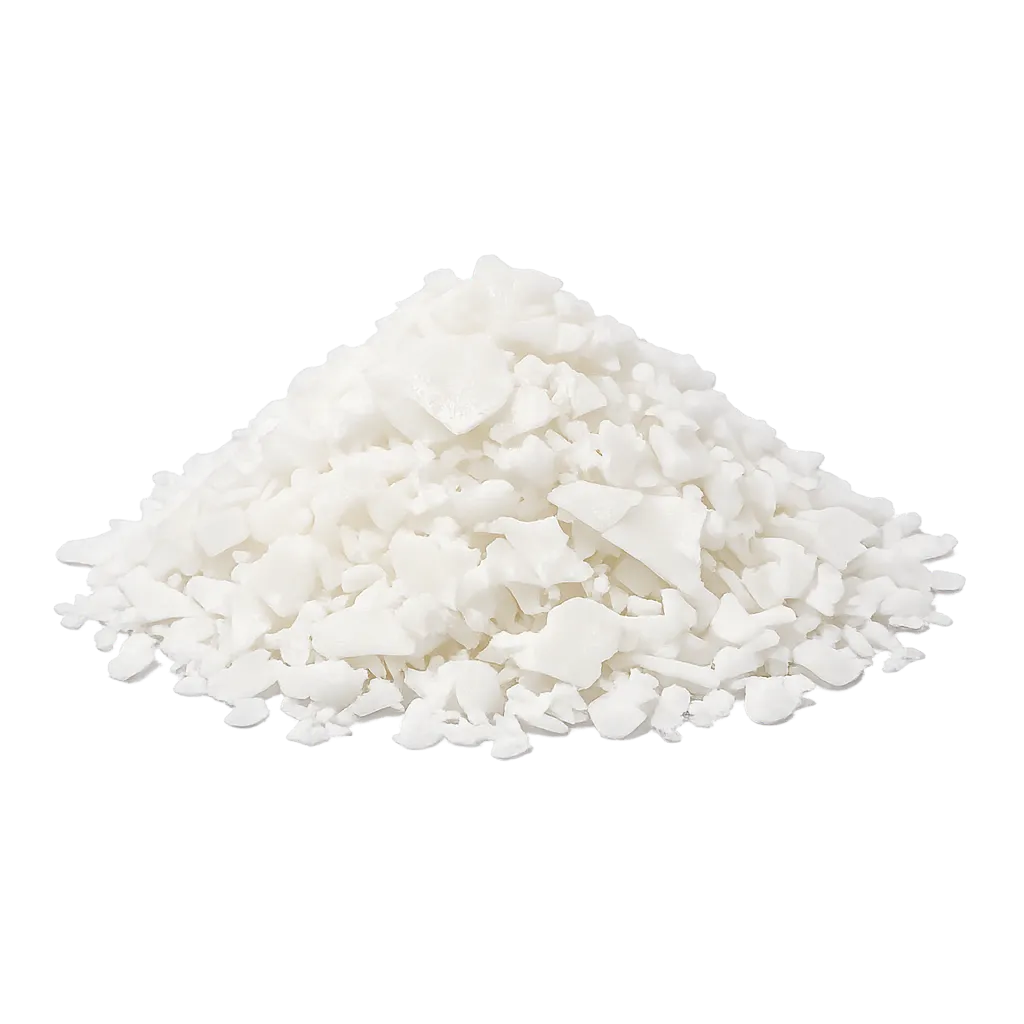
INCI: Ceteareth-20 | CAS: 68439-49-6 | Grade: Cosmetic | Form: Milky white solid flakes
pH (1% solution): 5.0 to 7.0 | Cloud point: 86 to 91 degrees Celsius | Moisture: max 1.0% | Colour: max 30 Hazen
HLB: approximately 15.2 to 15.7 (high HLB, strongly hydrophilic)
Functions (INCI/EU CosIng): Emulsifying, Surfactant, Emulsion Stabilising
Primary application: O/W emulsifier for creams, lotions, conditioners, sunscreens
Secondary application: Solubiliser for fragrances and active ingredients in aqueous systems
Non-ionic | Broad pH stability | Compatible with anionic, cationic, and non-ionic systems
Benefits
The standard O/W emulsifier that works with virtually any oil or active
Ceteareth-20 is one of the most universally compatible emulsifiers in cosmetic formulation. Its high HLB of approximately 15.2 to 15.7 means it pulls strongly toward the water phase, making it ideal for oil-in-water emulsions where the water phase dominates. It is compatible with mineral oils, vegetable oils, synthetic esters, waxes, and butters. It works across a wide pH range of 3.0 to 10.0 without losing stability. For a startup brand building a cream base that needs to accommodate actives, botanical extracts, and fragrance oils in the same formula, this broad compatibility profile removes a large category of formulation failure risk before testing even begins.
The 4:1 emulsifying wax system
Ceteareth-20 is the active emulsifying component in the commercially sold Emulsifying Wax NF, the most widely used emulsifying wax in beginner and professional cream formulation. The standard ratio is 4 parts Cetearyl Alcohol to 1 part Ceteareth-20. In a typical cream formula, 4% Cetearyl Alcohol paired with 1% Ceteareth-20 creates a stable, medium-viscosity cream with a smooth, slightly waxy skin feel. Increasing the ratio to 6% Cetearyl Alcohol and 2% Ceteareth-20 produces a richer, thicker body butter texture. Formulators who source both Cetearyl Alcohol and Ceteareth-20 separately have full control over the ratio and can fine-tune viscosity, texture, and skin feel in a way that is not possible with a pre-blended emulsifying wax.
Stable across a wide pH range
Many emulsifiers are pH-sensitive. Certain natural emulsifiers, for example, are unstable below pH 5 or above pH 7, which limits the actives and preservatives that can be used alongside them. Ceteareth-20 is stable across pH 3 to 10, per multiple industry formulation references. This means it can anchor a cream base containing salicylic acid at pH 3.5, a standard moisturiser at pH 5.5, and an alkaline hair conditioning formula at pH 6.5 to 7.0 without requiring a different emulsifier for each. For a brand building across multiple product categories, this stability profile is a meaningful formulation efficiency advantage.
Effective protective colloid
In addition to its emulsification function, Ceteareth-20 acts as a protective colloid, forming a stabilising layer around dispersed particles in the emulsion. This is particularly relevant for formulations containing inorganic UV filters (zinc oxide, titanium dioxide), pigments, and particulate actives that tend to aggregate over time. At use levels of 1 to 3%, Ceteareth-20 improves the long-term stability of these dispersed systems, reducing the likelihood of particle aggregation, cream separation, or viscosity drift during shelf life.
Dual-format versatility
At 0.5 to 3% in combination with fatty alcohols, Ceteareth-20 builds creams and lotions. At 15 to 30% as the primary ingredient, it creates a gel-like brushable texture used in hair care, edge controls, and brow gels. This use range makes it one of the few cosmetic emulsifiers that serves significantly different product formats without reformulation. For a brand building a skincare range and a hair care range from the same ingredient inventory, stocking a single grade of Ceteareth-20 covers both.
Applications and Usage Rates
For lightweight body lotions and sprayable emulsions
Use at 0.5 to 2% Ceteareth-20 in combination with 2 to 4% Cetearyl Alcohol. Add both to the oil phase at 65 to 75 degrees Celsius. Lower total emulsifier levels produce thinner, more fluid lotions that can be filled into pump dispensers or spray bottles. A 1% Ceteareth-20 and 3% Cetearyl Alcohol combination with a 20% oil phase creates a stable sprayable lotion with a light, non-greasy skin feel.
For standard face and body creams
Use at 1 to 3% Ceteareth-20 in combination with 3 to 6% Cetearyl Alcohol. The 4:1 ratio (Cetearyl Alcohol to Ceteareth-20) is the standard starting point. Add both to the oil phase and heat to 70 degrees Celsius. Combine with the water phase at matching temperature and mix until homogenous. A standard face cream formula with 4% Cetearyl Alcohol, 1% Ceteareth-20, 15% oil phase, and 80% water phase produces a smooth, medium-viscosity cream with a rich but non-greasy skin feel.
For rich body butters and thick creams
Use at 2 to 4% Ceteareth-20 in combination with 6 to 10% Cetearyl Alcohol with a high oil-phase percentage of 25 to 40%. Higher emulsifier and fatty alcohol levels produce a thicker, waxier cream that is suitable for foot creams, elbow balms, and intensive repair creams. The waxy, occlusive texture characteristic of this format is specifically a function of the Cetearyl Alcohol and Ceteareth-20 combination at these concentrations.
For hair conditioners and hair rinses
Use at 1 to 3% Ceteareth-20 in combination with cationic conditioning agents in rinse-off conditioner formats. Ceteareth-20 is compatible with cationic systems including behentrimonium chloride and cetrimonium chloride at standard conditioning use levels. It improves spreadability, enhances the distribution of conditioning actives along the hair shaft, and contributes to the smooth cream texture of a standard rinse-off conditioner.
For hair styling gels and edge controls
Use at 15 to 30% in an aqueous base for gel-like brushable hair styling products including edge controls, wave creams, and styling waxes. At these concentrations, Ceteareth-20 alone creates the gel structure without requiring additional gelling agents. The resulting texture is smooth, translucent to white, and has a firm but pliable application feel. This is the primary application for high-concentration Ceteareth-20 use in the Indian hair care market.
For sunscreen and UV emulsions
Use at 1 to 3% in O/W sunscreen emulsions to emulsify and stabilise both chemical UV filters in the oil phase and mineral UV filters (zinc oxide, titanium dioxide) as dispersed particles. The protective colloid function of Ceteareth-20 is particularly valuable in mineral sunscreen formulations to prevent agglomeration of UV filter particles and maintain even SPF distribution throughout the emulsion.
How to Use
Phase addition
Add Ceteareth-20 to the oil phase. Although it is water-soluble, melting it into the oil phase with other fatty materials ensures it is fully liquefied and evenly distributed before the emulsification step, which minimises the risk of undissolved particles causing graininess in the finished product.
Temperature
Heat the oil phase to 65 to 75 degrees Celsius. Ceteareth-20 has a melting point of approximately 40 to 45 degrees Celsius. It must be fully melted before combining with the water phase. Do not add to the oil phase below 60 degrees Celsius. Ensure both oil and water phases are at matching temperature before combining.
Emulsification
Combine the oil phase and water phase at matching temperature (65 to 75 degrees Celsius). Mix with a stick blender, overhead mixer, or homogeniser. Mix until a stable, uniform emulsion forms. Continue mixing as the emulsion cools. Below 40 degrees Celsius, switch to slow stirring to allow the emulsion to set. Add heat-sensitive ingredients including fragrance, preservatives, and temperature-sensitive actives below 40 degrees Celsius.
Graininess prevention
If the finished cream develops a grainy or sandy texture over time, the cause is usually incomplete melting or premature cooling during manufacturing. To prevent this, confirm the oil phase temperature is above 65 degrees Celsius before combining phases, and continue mixing with shear through the cooling phase until the emulsion is below 45 degrees Celsius. Grainy texture in Ceteareth-20 and Cetearyl Alcohol systems is a known issue when cooling is too rapid or mixing is insufficient during the critical cooling window.
Foaming
Ceteareth-20 is a surfactant and will produce foam under high-shear mixing at low temperatures. Avoid high-shear mixing below 40 degrees Celsius in the cool-down phase. If micro-foaming occurs in the finished product, reduce mixing speed during cool-down or switch from high-shear to paddle mixing below 45 degrees Celsius.
Claims You Can Make
For your label:
O/W Emulsifier | Oil-in-Water Emulsifier | Non-Ionic Emulsifier | Compatible with All Skin Types on Intact Skin | Stable Emulsion System | PEG-20 Cetyl/Stearyl Ether
For your formulator brief:
INCI: Ceteareth-20 | CAS 68439-49-6 | HLB approximately 15.2 to 15.7 | pH 5.0 to 7.0 | Cloud point 86 to 91 degrees Celsius | Moisture max 1.0% | Melting point approximately 40 to 45 degrees Celsius | pH stability 3.0 to 10.0 | Use level 0.5 to 6% emulsions, up to 30% hair gels | CIR reviewed: safe for use in cosmetics on intact skin | EU CosIng listed: Emulsifying, Surfactant functions | Compatible with anionic, cationic, non-ionic systems
For formulation support or sample requests, contact the CosmySupplies team.WhatsApp | Email: info@cosmysupplies.com
Technical Information
|
Property |
Value |
|
INCI Name |
Ceteareth-20 |
|
CAS Number |
68439-49-6. Note: also listed as 68956-68-3 in some references. UVCB substance; multiple CAS numbers in use. |
|
EINECS Number |
Not assigned. Ceteareth-20 is a UVCB substance (substance of unknown or variable composition). |
|
Supplier (this batch) |
Suzhou Greenway Biotech Co., Ltd, Suzhou High-Tech Zone, China |
|
Chemical Description |
Polyoxyethylene (20) cetyl/stearyl ether. Non-ionic surfactant produced by ethoxylation of cetearyl alcohol with an average of 20 moles of ethylene oxide. |
|
Appearance |
Milky white solid. Waxy flakes or pastilles. |
|
Colour |
Max 30 Hazen (Pt-Co). |
|
pH (1% solution) |
5.0 to 7.0 |
|
Cloud Point |
86 to 91 degrees Celsius. Formulation note: if the ingredient is heated above the cloud point, it may become temporarily turbid. This is normal and reversible. |
|
Moisture |
Max 1.0% |
|
Melting Point |
Approximately 40 to 45 degrees Celsius |
|
HLB Value |
Approximately 15.2 to 15.7 |
|
pH Stability Range |
3.0 to 10.0 |
|
Solubility |
Soluble in water and alcohol. Dispersible in oils. |
|
Suggested Use Level |
0.5 to 6% in emulsions. 15 to 30% in hair styling gels and edge controls. |
|
Standard Pairing Ratio |
4:1 Cetearyl Alcohol to Ceteareth-20 for standard creams and lotions. |
|
INCI Functions (EU CosIng) |
Emulsifying, Surfactant |
|
Surfactant Compatibility |
Compatible with anionic, cationic, and non-ionic systems. |
|
Dioxane Residual |
EU limit for finished cosmetic products: 10 ppm. Ethoxylated ingredients can contain 1,4-dioxane as a manufacturing by-product. |
|
Ethylene Oxide Residual |
EU limit: 1 ppm. |
|
CIR Status |
Safe for use in cosmetics on intact skin. Should not be used on damaged skin. |
|
COSMOS Status |
NOT PERMITTED in COSMOS-certified formulations. Ethoxylated ingredients are excluded from the COSMOS positive list. |
|
Shelf Life |
Two years from manufacture date |
|
Storage |
Room temperature, sealed, away from light. |
Pairs Well With
The standard emulsifying partner for Ceteareth-20. Use at 4:1 Cetearyl Alcohol to Ceteareth-20 ratio for standard creams. This combination forms the base of Emulsifying Wax NF. Cetearyl Alcohol adds viscosity, a waxy skin feel, and emulsion structure while Ceteareth-20 provides the emulsifying function. This is the single most important pairing on this page.
Humectant in the water phase of O/W creams and lotions. Glycerin at 3 to 5% alongside Ceteareth-20 and Cetearyl Alcohol is the standard starting water phase for a beginner moisturiser. Fully compatible.
High-oleic, highly emollient oil-phase ingredient in body creams and butter-texture emulsions. Ceteareth-20 emulsifies shea butter efficiently at standard ratios. Shea-based creams are a primary use case for this emulsifier in the Indian indie brand market.
Silicone emollient for smooth, fast-absorbing skin feel in lightweight lotions and face creams. Fully compatible with the Ceteareth-20 and Cetearyl Alcohol emulsifier system. Dimethicone at 1 to 3% in the oil phase improves spreadability and reduces the slightly waxy feel that high Cetearyl Alcohol content can produce.
High-use skin conditioning active in water-based serums and creams. Niacinamide is added to the water phase and is fully compatible with the Ceteareth-20 emulsifier system. Standard pairing in Indian skin brightening and barrier repair cream formulas.
Mineral UV filter in physical sunscreen O/W emulsions. Ceteareth-20 functions as a protective colloid that stabilises zinc oxide particles in the emulsion, preventing agglomeration and maintaining consistent SPF distribution.
Phenoxyethanol and Ethylhexylglycerin
Standard preservative system for O/W emulsions. Fully compatible with the Ceteareth-20 emulsifier base. Add in the cool-down phase below 40 degrees Celsius.
Disclaimer:
All products sold by CosmySupplies are supplied as raw materials for research, formulation, and manufacturing purposes. The information on this page is for formulation reference only and does not constitute professional, regulatory, or safety advice.
Raw materials of natural or botanical origin may show variation in colour, odour, texture, and physical properties between batches. These variations are inherent to the material and do not indicate a change in quality or function.
Customers are responsible for evaluating the suitability of any ingredient for their specific application and ensuring compliance with applicable regulations. CosmySupplies does not guarantee suitability for any specific end use without independent verification.
All transactions on CosmySupplies are B2B in nature. Contact us at support@cosmysupplies.com or WhatsApp before placing a bulk order. cosmysupplies.com.
Our latest content
Check out what's new in our company !