Product Information
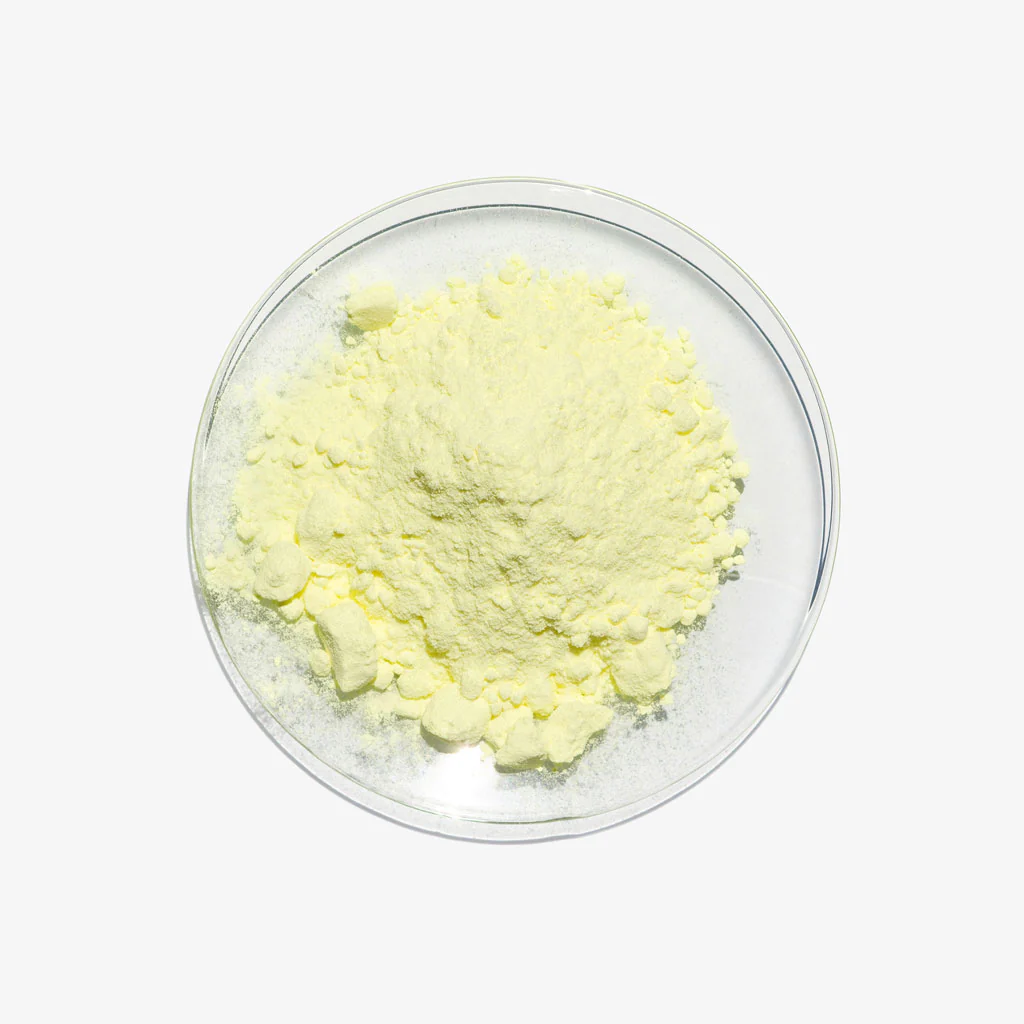
CosmySupplies supplies cosmetic-grade Guar Hydroxypropyltrimonium Chloride (INCI: Guar Hydroxypropyltrimonium Chloride, CAS 65497-29-2) in India. A plant-derived cationic conditioning polymer from guar gum, used in shampoos, conditioners, body washes, and leave-on conditioning products. Permitted in COSMOS-certified formulations. No ethylene oxide, no 1,4-dioxane. Vegan, Halal suitable, non-GMO. Supplied as off white to yellow free flowing powder. Viscosity 3000 to 4000 cP at 1%, pH 5.5 to 7.5. Indian-origin supplier. COA available on request. Shipped from Bengaluru across India. Available at cosmysupplies.com.
INCI: Guar Hydroxypropyltrimonium Chloride | CAS: 65497-29-2 | COSING REF: 34177 | Grade: Cosmetic
Form: Off white to yellow free flowing powder | Viscosity: 3000 to 4000 cP at 1% | pH: 5.5 to 7.5 | Moisture: 5 to 12% | Molecular weight: 2 MDa to 8 MDa
Raw material source: Guar (Cyamopsis tetragonoloba) | Country of origin: India
Functions: Antistatic, Hair Conditioning, Skin Conditioning, Viscosity Increasing
Primary applications: Conditioning shampoos, two-in-one products, rinse-off conditioners, body washes
Secondary applications: Leave-in conditioners, skin care lotions, shave creams, deposition aid for silicones
COSMOS Permitted | Vegan | Halal Suitable | Non-GMO | No Ethylene Oxide | No 1,4-Dioxane | Paraben Free | Silicone Free
Benefits
Deposits 3 to 10 times more silicone onto hair than PQ-7 or PQ-10
This is the single most important technical differentiator for Guar Hydroxypropyltrimonium Chloride versus other cationic conditioning polymers. In a standardised comparison study using 1% dimethicone in a shampoo base, GHTC deposited 43 to 53% of the silicone present onto hair tresses. Polyquaternium-7 deposited 13.6%. Polyquaternium-10 deposited only 4.9% . This efficiency advantage means a formulator building a conditioning shampoo with GHTC can achieve the same silicone conditioning result at a significantly lower dimethicone input than with PQ-7 or PQ-10 alone, or can formulate a silicone-free conditioning shampoo with better conditioning performance than a PQ-7 formula with silicone. This is why GHTC is described in formulation literature as the conditioning polymer of choice for silicone deposition and anti-dandruff active delivery.
Plant-derived, COSMOS permittedMost cationic conditioning polymers used in commercial shampoos are synthetic: PQ-7, PQ-10 ,PQ-28. Guar Hydroxypropyltrimonium Chloride is derived from guar gum, a natural polysaccharide from the seeds of the guar plant. India grows approximately 80% of the world's guar supply. The quaternisation process that converts guar gum to GHTC is a synthetic modification, but the resulting ingredient retains sufficient natural character to be explicitly permitted in COSMOS-certified formulations as one of a small number of approved synthetic derivatives. This COSMOS permission is the reason GHTC is the standard conditioning polymer choice for brands building certified natural shampoos and conditioners. No other commonly used conditioning polymer has both the performance profile of GHTC and COSMOS approval.
Substantive cationic charge deposits selectively on damaged hair
The positively charged quaternary ammonium groups on GHTC's polymer backbone are attracted electrostatically to the negatively charged surface of hair fibres. Bleached, coloured, heat-styled, and chemically treated hair carries a stronger negative charge due to damage to the cuticle surface. GHTC selectively deposits more heavily on the areas of the hair shaft where the negative charge is most intense, which are exactly the areas most in need of conditioning. This selective deposition mechanism means GHTC delivers more conditioning where it is needed rather than distributing uniformly across all hair regardless of condition. The conditioning film deposited reduces inter-fibre friction, improves wet combability, reduces static charge, and adds a degree of shine and softness.
Compatible with anionic surfactant systems
In anionic surfactant systems such as SLES-based shampoos, many cationic polymers form complexes with the anionic surfactant that produce cloudiness, precipitates, or stability problems. GHTC forms coacervate complexes with anionic surfactants, but the coacervate is designed to deposit onto hair rather than remain in the bulk of the formulation. At typical use levels of 0.2 to 0.5%, most grades of GHTC remain compatible with SLES, cocamidopropyl betaine, and sulphate-free anionic bases without producing permanent cloudiness or instability. Higher charge density grades (such as the 3000 to 4000 cP grade in this product) are most effective for deposition in anionic surfactant systems but may produce some haze. If product clarity is a formulation requirement, consider using at the lower end of the use range or combining with a clarity-enabling surfactant system.
Deposition aid for anti-dandruff actives and other hydrophobic ingredients
GHTC's superior deposition efficiency extends beyond silicones. It is the conditioning polymer of choice for deposition of zinc pyrithione (ZPT), the most widely used anti-dandruff active in commercial shampoos. The mechanism is the same: the coacervate formed between GHTC and the anionic surfactant captures the hydrophobic active and deposits it onto the scalp and hair surface during the rinse step. For a brand building an anti-dandruff shampoo without access to complex encapsulation technology, formulating with GHTC at 0.2 to 0.5% alongside ZPT at 1% provides significantly better anti-dandruff active delivery than using PQ-10 or PQ-7 at equivalent concentrations.
Skin conditioning and viscosity enhancement in body washes and skin care
At lower use levels of 0.5 to 0.75% in body washes and liquid soaps, GHTC provides a soft, smooth after-feel on skin without leaving a heavy or greasy residue. It reduces the post-wash skin tightness that surfactant-based body washes can produce by depositing a lightweight conditioning film on the skin surface during the rinse. In skin care formulations including lotions, creams, and serum-type products, GHTC at 0.1 to 0.5% acts as a film former and viscosity modifier, improving application texture and contributing a silky skin feel. The conditioning film is non-comedogenic (comedogenic rating 0 per multiple formulation references) and is compatible with most aqueous skin care systems.
Applications and Usage Rates
For conditioning shampoos and two-in-one products
Use at 0.2 to 0.5% in SLES-based conditioning shampoos and two-in-one conditioning shampoos. This is the primary application for GHTC and the use level validated across most commercial formulations. Disperse in cold water with high shear mixing before adding surfactants, or add directly to the aqueous phase. At 0.2 to 0.3%, conditioning is moderate and suitable for daily-use shampoos for normal hair. At 0.4 to 0.5%, conditioning is stronger and appropriate for dry, damaged, or chemically treated hair formulations.
For silicone deposition and anti-dandruff shampoos
Use at 0.2 to 0.5% in shampoos containing dimethicone or zinc pyrithione where active deposition onto the scalp and hair shaft is the primary objective. At 0.2%, GHTC deposits significantly more silicone than PQ-7 at equivalent concentrations. For an anti-dandruff shampoo with 1% zinc pyrithione, use GHTC at 0.3 to 0.5% in combination with an SLES and cocamidopropyl betaine or amphoacetate surfactant base. The coacervate mechanism works most efficiently in the pH 5.0 to 6.5 range typical of conditioning shampoos.
For rinse-off conditioners and hair masks
Use at 0.5 to 1.5% in rinse-off cream conditioners and deep conditioning hair masks. In conditioner formats, GHTC is typically used alongside a cationic fatty quaternary ammonium compound such as behentrimonium chloride or cetrimonium chloride. GHTC contributes the polymer film-forming and deposition functions; the fatty quaternary provides the emollient conditioning feel. Add GHTC to the water phase with mixing before assembling the conditioner emulsion.
For leave-in conditioning sprays and detangling products
Use at 0.2 to 0.5% in aqueous leave-in conditioning sprays and detangling formulations. GHTC is less commonly used in leave-on formats than PQ-7, but it delivers a conditioning film that improves combability and reduces static in leave-in applications. At these low concentrations the polymer does not make the hair feel heavy or produce build-up. The non-greasy, lightweight film is well-suited for fine hair and for product formats spritzed onto wet hair before combing.
For body washes, liquid soaps, and skin care
Use at 0.5 to 0.75% in body washes and liquid hand soaps. GHTC improves post-wash skin softness and reduces the drying sensation from surfactants. In skin care, use at 0.1 to 0.5% in lotions, creams, and serum-type formulations as a conditioning film former and viscosity modifier. Non-comedogenic at cosmetic use concentrations. Compatible with most anionic, nonionic, and cationic surfactant systems used in body care and skin care.
How to Use
Addition method
Guar Hydroxypropyltrimonium Chloride is supplied as a free-flowing powder. It requires dispersion in water with agitation before use. For shampoo and conditioning applications: add the GHTC powder to cold water with high shear mixing (overhead mixer, homogeniser, or stick blender) before adding surfactants. This ensures full polymer hydration and prevents lumping or undissolved particles in the finished product. Allow adequate mixing time for full hydration — typically 15 to 30 minutes depending on the mixing intensity and water temperature.
Moisture content and dosage calculation
The batch result for moisture in this TDS is 8.9%. The active polymer content on a wet weight basis is approximately 91.1%. When calculating use levels based on dry polymer weight, adjust for the actual batch moisture from the COA. At the stated 8.9% moisture, to achieve 0.3% active GHTC in a finished formula, the powder addition should be approximately 0.33% by weight of the formula.
pH considerations
The TDS specification states pH 5.5 to 7.5. Most GHTC grades dissolve to give pH values in this range in aqueous solution. For standard shampoo formulas (pH 5.0 to 6.5), no pH adjustment is typically required for GHTC incorporation. For formulations outside this range, check compatibility. Acidic conditions (below pH 4) and highly alkaline conditions (above pH 9) may affect polymer performance.
Cold process compatible
GHTC does not require heating for dissolution. It is cold process compatible when mixed with sufficient shear in water. This simplifies the manufacturing process for small-batch producers without temperature-controlled equipment and reduces processing time and energy cost.
Claims You Can Make
For your label:
Plant-Derived Conditioning Polymer | Guar-Derived | COSMOS Permitted | Vegan | Halal Suitable | Non-GMO | No Ethylene Oxide | No 1,4-Dioxane | Silicone-Free Ingredient | Paraben Free | Anti-Static | Hair Conditioning | Skin Conditioning
For your formulator brief:
INCI: Guar Hydroxypropyltrimonium Chlorid | CAS 65497-29-2 | COSING REF 34177 | Viscosity 3000 to 4000 cP at 1% aqueous | pH 5.5 to 7.5 (TDS confirmed) | Moisture 5 to 12%, batch result 8.9% | MW 2 MDa to 8 MDa | TAMC less than 1000 CFU/mL, batch result less than 80 | TYMC less than 100 CFU/mL, batch result less than 90 (TDS confirmed) | Functions: Antistatic, Hair Conditioning, Skin Conditioning, Viscosity Increasing | CIR reviewed: safe for cosmetic use | No ethylene oxide, no 1,4-dioxane | COSMOS permitted | Silicone deposition 43 to 53% vs 13.6% for PQ-7 | Shelf life 24 months, storage below 40 degrees C
For formulation support or sample requests, contact the CosmySupplies team.
WhatsApp | Email: info@cosmysupplies.com
Technical Information
|
Property |
Value |
|
INCI Name |
Guar Hydroxypropyltrimonium Chloride |
|
CAS Number |
65497-29-2 |
|
COSING REF |
34177 |
|
Chemical Description |
Cationic derivative of guar gum (Cyamopsis tetragonoloba). Produced by reaction of guar gum with EPTMAC (2,3-epoxypropyltrimethylammonium chloride). Semi-natural cationic polysaccharide with quaternary ammonium groups on a nonionic guar backbone. Not produced by ethoxylation. |
|
Supplier (this batch) |
Farmoganic Health and Beauty, Aurangabad (Chhatrapati Sambhajinagar), Maharashtra, India |
|
Raw Material Source |
Guar (Cyamopsis tetragonoloba seeds). India origin. India produces approximately 80% of global guar supply. |
|
Appearance |
Off white to yellow free flowing powder |
|
Viscosity |
3000 to 4000 — assumed cP at 1% aqueous solution. Consistent with high MW conditioning grade. |
|
Molecular Weight |
2 MDa to 8 MDa (TDS specification). High MW range consistent with high deposition and conditioning grades. |
|
pH |
5.5 to 7.5. Batch result: complies. |
|
Moisture |
5 to 12% specification; 8.9% batch result |
|
TAMC |
Less than 1000 CFU/mL specification; batch result less than 80 |
|
TYMC |
Less than 100 CFU/mL specification; batch result less than 90 |
|
Functions (EU CosIng) |
Antistatic, Hair Conditioning, Skin Conditioning, Viscosity Increasing |
|
COSMOS Status |
Permitted in COSMOS-certified formulations. One of a small number of synthetically modified natural polymers explicitly on the COSMOS positive list. |
|
Silicone Deposition |
43 to 53% of dimethicone present in shampoo deposited onto hair tresses vs 13.6% for PQ-7 and 4.9% for PQ-10 at equivalent 0.2% use level. |
|
Typical Use Level |
0.2 to 0.5% in shampoos and conditioners . 0.5 to 0.75% in body washes. 0.1 to 0.5% in skin care. |
|
Cold Process |
Compatible. No heating required for dissolution. |
|
Ethylene Oxide |
Not present. Produced by EPTMAC quaternisation, not ethoxylation. |
|
1,4-Dioxane |
Not present. |
|
Certifications |
Vegan | Halal suitable | Non-GMO | Paraben free | Silicone free, mineral oil free, sulphate free, phthalate free | REACH compliant | BSE/TSE free | No pesticides | No nitrosamines |
|
CIR Status |
Reviewed in CIR Final Report on Safety Assessment of Galactomannans as Used in Cosmetics . GHTC specifically included. Non-irritating, non-sensitising, biodegradable. Safe for use in cosmetic products. |
|
Shelf Life |
24 months from manufacture date when stored below 40 degrees Celsius in sealed original packaging away from sunlight, heat, and chemical fumes |
Pairs Well With
Sodium Laureth Sulphate (SLES)
Primary anionic surfactant in conditioning shampoos. GHTC forms the conditioning coacervate in an SLES-based system that drives silicone and active deposition. The 0.3% GHTC and 14% SLES combination is the most validated use pattern in the conditioning shampoo literature.
Amphoteric co-surfactant used alongside SLES in conditioning shampoos. GHTC is compatible with cocamidopropyl betaine systems. Replacing some SLES with amphoacetates (sodium cocoamphoacetate) in GHTC-containing formulas further increases silicone deposition.
Dimethicone
The deposition pairing that defines GHTC's performance advantage. GHTC at 0.2 to 0.3% in a shampoo base deposits 43 to 53% of dimethicone present onto hair. This combination is the foundation of high-performance conditioning shampoos.
Zinc Pyrithione
Anti-dandruff active. GHTC is the conditioning polymer of choice for zinc pyrithione deposition from anti-dandruff shampoo bases. The coacervate mechanism deposits ZPT onto the scalp alongside the conditioning film.
Behentrimonium Chloride
Cationic fatty conditioning agent in rinse-off conditioners. GHTC at 0.5 to 1% alongside behentrimonium chloride at 1 to 3% creates a dual conditioning system in rinse-off conditioners: GHTC provides film-forming and deposition; behentrimonium provides emollient conditioning feel.
Panthenol
Hair conditioning and moisture retention active. Panthenol at 1 to 2% alongside GHTC in conditioning shampoos adds moisturising conditioning claims to the GHTC film-forming function.
Important Information
Guar Hydroxypropyltrimonium Chloride is produced by the reaction of guar gum with EPTMAC (2,3-epoxypropyltrimethylammonium chloride). It does not contain ethylene oxide or 1,4-dioxane, which are manufacturing by-products associated with ethoxylated ingredients. This ingredient is not produced by ethoxylation.
This ingredient is permitted in COSMOS-certified cosmetic formulations. The raw material approval enables inclusion in COSMOS-certified finished products. Finished product COSMOS certification must be obtained separately by the brand.
The Halal suitability of this product is based on an internal self-declaration by Farmoganic Health and Beauty dated May 2019. This is not a third-party Halal certification from an accredited Halal certifying body. Brands requiring third-party Halal certification documentation should request this from the supplier or seek an independently Halal certified alternative source.
Moisture content of this batch is 8.9%. Adjust use level calculations based on the actual batch moisture confirmed from the COA to ensure the intended active polymer concentration in the finished formulation.
COA is available on request. No download link. Contact us via WhatsApp or email.
Disclaimer:
All products sold by CosmySupplies are supplied as raw materials for research, formulation, and manufacturing purposes. The information on this page is for formulation reference only and does not constitute professional, regulatory, or safety advice.
Raw materials of natural or botanical origin may show variation in colour, odour, texture, and physical properties between batches. These variations are inherent to the material and do not indicate a change in quality or function.
Customers are responsible for evaluating the suitability of any ingredient for their specific application and ensuring compliance with applicable regulations. CosmySupplies does not guarantee suitability for any specific end use without independent verification.
All transactions on CosmySupplies are B2B in nature. Contact us at support@cosmysupplies.com or WhatsApp before placing a bulk order. cosmysupplies.com.
Our latest content
Check out what's new in our company !