Product Information
CosmySupplies supplies Phenonip preservative blend by Clariant International Ltd (INCI: Phenoxyethanol (and) Methylparaben (and) Ethylparaben (and) Propylparaben (and) Butylparaben (and) Isobutylparaben) in India. A broad-spectrum cosmetic preservative blend active against gram positive and gram negative bacteria, yeasts, and moulds. Use at 0.25 to 1.0% in cosmetic formulations. pH stable from 3 to 8. REGULATORY NOTICE: This product contains Isobutylparaben, which is prohibited in the European Union and United Kingdom under EU Cosmetics Regulation 1223/2009 Annex II. Not suitable for formulations intended for EU or UK markets. India regulatory status: confirm with your cosmetic safety assessor before use. COA available on request. Shipped from Bengaluru across India.
INCI: Phenoxyethanol (and) Methylparaben (and) Ethylparaben (and) Propylparaben (and) Butylparaben (and) Isobutylparaben
Grade: Cosmetic | Supplier: Clariant International Ltd, Switzerland
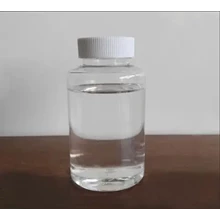
Form: Colourless to light straw viscous liquid (20 degrees Celsius) | Specific gravity: 1.124 g/cm3
Component percentages: Phenoxyethanol 70.0 to 75.0% | Methylparaben 14.5 to 16.5% | Ethylparaben 3.5 to 4.3% | n-Butylparaben 3.7 to 4.3% | Isobutylparaben 1.7 to 2.3% | Propylparaben 1.7 to 2.3%
pH stability: 3 to 8 | Spectrum: gram positive bacteria, gram negative bacteria, yeasts, moulds
Use level: 0.25 to 1.0% in finished formulations
REGULATORY NOTICE: Isobutylparaben is prohibited in EU and UK cosmetics (EU Regulation 1223/2009 Annex II). Not for use in formulations intended for EU or UK markets.
Benefits
Broad-spectrum antimicrobial activity against bacteria, yeasts, and moulds
Phenonip provides documented activity against the full range of microorganisms that cosmetic products must be preserved against. The Clariant TDS provides MIC (minimum inhibitory concentration) data against 11 named microorganism strains. MIC values range from 0.10% to 0.225% for gram negative bacteria including Pseudomonas aeruginosa (MIC 0.225%), Escherichia coli (MIC 0.20%), and Salmonella entiritidis (MIC 0.225%). Against gram positive bacteria: Staphylococcus aureus (MIC 0.20%). Against yeasts: Candida albicans (MIC 0.15%). Against moulds: Aspergillus brasiliensis (MIC 0.125%) and Penicillium puprogenum (MIC 0.10%). Use at 0.25 to 0.3% in shampoos and foam baths provides activity below MIC with safety margin.
Synergistic blend:
Phenoxyethanol alone has limited activity against certain gram negative bacteria at cosmetic use concentrations. The multi-paraben system in Phenonip extends and broadens the antimicrobial spectrum through synergy: each paraben ester attacks microbial cell membranes through a slightly different mechanism, and the combination with phenoxyethanol covers the full gram positive, gram negative, yeast, and mould spectrum that a single-active preservative often cannot. The Clariant TDS confirms the British Pharmacopoeia (1988) microbial challenge test results: at 0.3% in a hair conditioner, Phenonip achieves full kill of Pseudomonas aeruginosa, Staphylococcus aureus, Candida albicans, and Aspergillus brasiliensis within 1 to 2 days of challenge.
pH stability across the full cosmetic formulation range
Phenonip remains fully stable across pH 3 to 8. This covers the entire pH range used in standard cosmetic formulations: shampoos (pH 4.5 to 6.5), skin toners (pH 4 to 6), O/W creams (pH 5 to 7), and cleansers (pH 4.5 to 7). Unlike some preservative systems that degrade or lose activity at the extremes of the cosmetic pH range, Phenonip maintains full antimicrobial activity throughout. Temperature stability is also confirmed: aqueous solutions of Phenonip can withstand autoclave sterilisation without loss of activity, making it suitable for aseptically manufactured products.
Versatile incorporation:
Phenonip can be incorporated into formulations via three routes depending on the manufacturing process: directly into the aqueous phase up to its water solubility limit (approximately 0.5% in water at room temperature, higher at 60 to 70 degrees Celsius), dissolved in the oil or lipid phase prior to emulsification, or dissolved in propylene glycol as a concentrate then stirred into the aqueous phase. This flexibility means Phenonip is compatible with most standard cosmetic manufacturing processes without requiring a specialised addition sequence.
Activity retained in the presence of surfactants
Many preservatives are partially inactivated by non-ionic surfactants such as polysorbates and ethoxylated emulsifiers, which encapsulate the preservative molecule and reduce its free concentration available for antimicrobial activity. The Clariant TDS demonstrates that Phenonip retains microbiocidal activity in the presence of 5% Polysorbate-80: full kill of Staphylococcus aureus, Pseudomonas aeruginosa, and Candida albicans is achieved within 2 days of challenge at typical use concentrations. This surfactant compatibility makes Phenonip practical for preservation of shampoos, foam baths, and liquid soaps where high surfactant levels would compromise other preservative systems.
Applications and Usage Rates
For shampoos and foam baths
Use at 0.25 to 0.65% in shampoo and foam bath formulations. The Clariant TDS confirms complete microbiocidal effect within one day against Pseudomonas aeruginosa, E. coli, Staphylococcus aureus, and Candida albicans at 0.3% in a shampoo base. Dissolve in the surfactant prior to addition of water, or dissolve in the aqueous phase at 60 to 70 degrees Celsius. Phenonip is miscible with polysorbate-80 and stable in the presence of triethanolamine lauryl sulphate at 35%.
For O/W and W/O emulsions
Use at 0.4 to 0.7% in standard O/W and W/O cream and lotion formulations. For O/W systems, divide the Phenonip dose between aqueous and oil phases to ensure effective distribution across both phases. The Clariant TDS British Pharmacopoeia challenge test confirms Phenonip at 0.5% in an O/W suntan cream achieves full kill of all five challenge organisms within 14 days. At 1% in an O/W moisturising cream, full kill is achieved within 14 days. Higher concentrations are required for formulations that are particularly difficult to preserve due to high water activity or challenging ingredients.
For products with high protein content
Use at 0.5 to 1% in formulations with high protein content such as protein-enriched conditioners, hair masks with hydrolysed proteins, and skin care products with peptides. Protein binds preservatives and reduces their effective free concentration. The Clariant TDS specifically notes that products with high protein content may require levels of 0.5 to 1%.
For surfactant-based products and cleansers
Use at 0.2 to 0.6% in liquid cleansers, dishwashing detergents, and surfactant-based products. Dissolve in the surfactant concentrate before adding water and other ingredients. Phenonip is miscible with triethanolamine and polysorbate-80, making it compatible with most surfactant systems.
How to Use
Aqueous phase addition
For aqueous systems at room temperature: dissolve Phenonip in a suitable solvent such as propylene glycol at an appropriate concentration, then stir this concentrate into the water phase to achieve a final Phenonip concentration below its maximum water solubility of approximately 0.5%. For heated aqueous systems: heat water to 60 to 70 degrees Celsius, add Phenonip with stirring. This allows dissolution at concentrations appropriate for most formulations.
Oil phase addition in emulsions
For emulsified systems: dissolve Phenonip in the lipid phase prior to emulsification. It is often good practice to divide the Phenonip dose between the aqueous and lipid phases during preparation. Addition to the final emulsion during the cooling stage is also possible for many emulsion types.
Surfactant systems
In surfactant and detergent based products: dissolve Phenonip in the surfactant prior to addition of water and other ingredients. This ensures even distribution throughout the surfactant matrix.
pH and temperature
Confirm the finished product pH is within the stability range of pH 3 to 8. Phenonip is thermally stable and aqueous solutions can withstand autoclave sterilisation. No special temperature restrictions during normal cosmetic manufacturing processes.
Claims You Can Make
For your formulator brief:
INCI: Phenoxyethanol (and) Methylparaben (and) Ethylparaben (and) Propylparaben (and) Butylparaben (and) Isobutylparaben | Appearance colourless to light straw viscous liquid | Specific gravity 1.124 g/cm3 | Component percentages as stated in TDS | Broad-spectrum activity: gram positive bacteria, gram negative bacteria, yeasts, moulds | pH stable 3 to 8 | Thermally stable to autoclave | Water solubility approximately 0.5% at room temperature | Miscible in ethanol, propylene glycol, isopropanol, polysorbate-80 | Use level 0.25 to 1.0% |
For formulation support or sample requests, contact the CosmySupplies team.
WhatsApp | Email: info@cosmysupplies.com
Technical Information
|
Property |
Value |
|
Product Name |
Phenonip |
|
INCI Designation |
Phenoxyethanol (and) Methylparaben (and) Ethylparaben (and) Propylparaben (and) Butylparaben (and) Isobutylparaben |
|
Supplier |
Clariant International Ltd, Rothausstrasse 61, 4132 Muttenz, Switzerland |
|
Chemical Description |
Synergistic blend of esters of para-hydroxybenzoic acid (parabens) in phenoxyethanol. Broad-spectrum preservative for cosmetics and toiletries. |
|
Appearance (20°C) |
Colourless to light straw viscous liquid |
|
Specific Gravity |
1.124 g/cm3 |
|
Component Percentages |
Phenoxyethanol: 70.0 to 75.0% w/w | Methylparaben: 14.5 to 16.5% w/w | Ethylparaben: 3.5 to 4.3% w/w | n-Butylparaben: 3.7 to 4.3% w/w | Isobutylparaben: 1.7 to 2.3% w/w | Propylparaben: 1.7 to 2.3% w/w |
|
Water Solubility |
Approximately 0.5% at room temperature. Higher solubility at 60 to 70 degrees Celsius. |
|
Solubility — Miscible with |
Ethanol, Isopropanol, Acetone, Propylene Glycol, Isopropyl Myristate, Triethanolamine, Polysorbate-80 |
|
Solubility — Partial |
Ethanol/Water 50/50: more than 95% | Peanut Oil: 25% | Glycerol: 10% | Triethanolamine Lauryl Sulphate 40%: 35% |
|
Solubility — Low |
Liquid Paraffin: less than 0.1% |
|
pH Stability |
pH 3 to 8 |
|
Thermal Stability |
Stable. Aqueous solutions withstand autoclave sterilisation without loss of activity |
|
Antimicrobial Spectrum |
Gram positive bacteria, gram negative bacteria, yeasts, moulds |
|
MIC — Gram Negative |
Pseudomonas aeruginosa: 0.225% | Escherichia coli: 0.20% | Proteus vulgaris: 0.225% | Salmonella entiritidis: 0.225% |
|
MIC — Gram Positive |
Staphylococcus aureus: 0.20% | Enterococcus faecium: 0.20% | Bacillus cereus: 0.15% |
|
MIC — Yeasts |
Candida albicans: 0.15% | Saccharomyces cerevisiae: 0.15% |
|
MIC — Moulds |
Aspergillus brasiliensis: 0.125% | Penicillium puprogenum: 0.10% |
|
Recommended Use Level |
0.25 to 1.0% in finished formulations. Higher concentrations for protein-rich or difficult-to-preserve systems. |
|
Application-Specific Levels |
Shampoos and foam baths: 0.25 to 0.65% | High protein products: 0.5 to 1.0% | Surfactant products: 0.2 to 0.6% | Emulsified systems: 0.4 to 0.7% | Nonionic emulsions: 0.5 to 1.0% |
|
CIR Status |
Considered safe as used (CIR 2006 — for individual paraben components and phenoxyethanol. Note: CIR safety assessment predates the EU prohibition of isobutylparaben.) |
|
EU Regulatory Status |
PROHIBITED. Isobutylparaben is listed in Annex II of EU Cosmetics Regulation 1223/2009 as a prohibited substance (Commission Regulation 358/2014). Phenonip cannot be used in any finished product for EU or UK markets. |
|
UK Regulatory Status |
PROHIBITED. Same prohibition applies under the UK Great Britain Cosmetic Products Enforcement Regulations (post-Brexit alignment with EU Annex II). |
|
US Regulatory Status |
Permitted. FDA does not subject parabens to specific concentration limits. CIR considers parabens safe as used at current cosmetic concentrations. |
|
Japan Regulatory Status |
The 2013 TDS cites Japan permitted at 1.33%. Confirm current status from current regulatory authority before claiming Japan compliance. |
|
India Regulatory Status |
HOLD. BIS IS 4707 Part 2 governs preservatives in India. BIS revised IS 4707 Part 2 in August 2025. The specific position of isobutylparaben in the revised standard is not confirmed from primary regulatory source at time of this page build. Route to Pooja Jadhav and Anjali Kulkarni for current status confirmation before advising Indian customers on compliance. |
|
COSMOS Status |
NOT PERMITTED. Synthetic preservative system. Not on COSMOS positive list for permitted preservatives. |
Pairs Well With
Chelating agent that boosts preservative efficacy by binding metal ions that can protect gram negative bacterial cell walls. EDTA at 0.05 to 0.1% alongside Phenonip significantly improves activity against Pseudomonas aeruginosa and other gram negative bacteria. Standard combination in most challenging-to-preserve formulations.
Humectant in aqueous cosmetics. Glycerin at 3 to 5% improves the water activity management of the formulation, which is one of the factors affecting preservative efficacy. Also used as a solvent carrier for Phenonip when preparing a propylene glycol concentrate is not preferred.
Phenonip is miscible in propylene glycol. For cold-process formulations or systems that cannot be heated, dissolving Phenonip in propylene glycol first and then stirring the concentrate into the water phase is the recommended incorporation method.
Important Information
India regulatory status: BIS IS 4707 Part 2 governs permitted preservatives for cosmetics sold in India. BIS revised IS 4707 Part 2 in August 2025. The current position of isobutylparaben specifically under the revised IS 4707 Part 2 standard has not been confirmed from an authoritative primary regulatory source at the time of publishing this page. Indian formulator buyers should confirm compliance with BIS IS 4707 Part 2 with their cosmetic safety assessor before using Phenonip in finished products for Indian domestic sale.
The regulatory data in the Clariant Phenonip Product Fact Sheet (May 2013) is outdated. The 76/768/EEC directive cited in the TDS has been replaced by EU Regulation 1223/2009. The 1.33% maximum and the EU regulatory statement in the Clariant TDS no longer reflect current EU regulatory status. Always refer to the current version of EU Regulation 1223/2009 for EU market compliance.
Phenonip is not permitted in COSMOS, ECOCERT, or Natrue certified formulations. It is a synthetic preservative blend and is not on the COSMOS positive list for permitted preservatives.
CIR considers the individual paraben components and phenoxyethanol safe as used in cosmetics at current concentrations (CIR 2006). This CIR safety conclusion predates the EU prohibition of isobutylparaben and does not override EU market restrictions.
COA is available on request. No download link. Contact us via WhatsApp or email.
Disclaimer:
All products sold by CosmySupplies are supplied as raw materials for research, formulation, and manufacturing purposes. The information on this page is for formulation reference only and does not constitute professional, regulatory, or safety advice.
Raw materials of natural or botanical origin may show variation in colour, odour, texture, and physical properties between batches. These variations are inherent to the material and do not indicate a change in quality or function.
Customers are responsible for evaluating the suitability of any ingredient for their specific application and ensuring compliance with applicable regulations. CosmySupplies does not guarantee suitability for any specific end use without independent verification.
All transactions on CosmySupplies are B2B in nature. Contact us at support@cosmysupplies.com or WhatsApp before placing a bulk order. cosmysupplies.com.
Our latest content
Check out what's new in our company !