Product Information
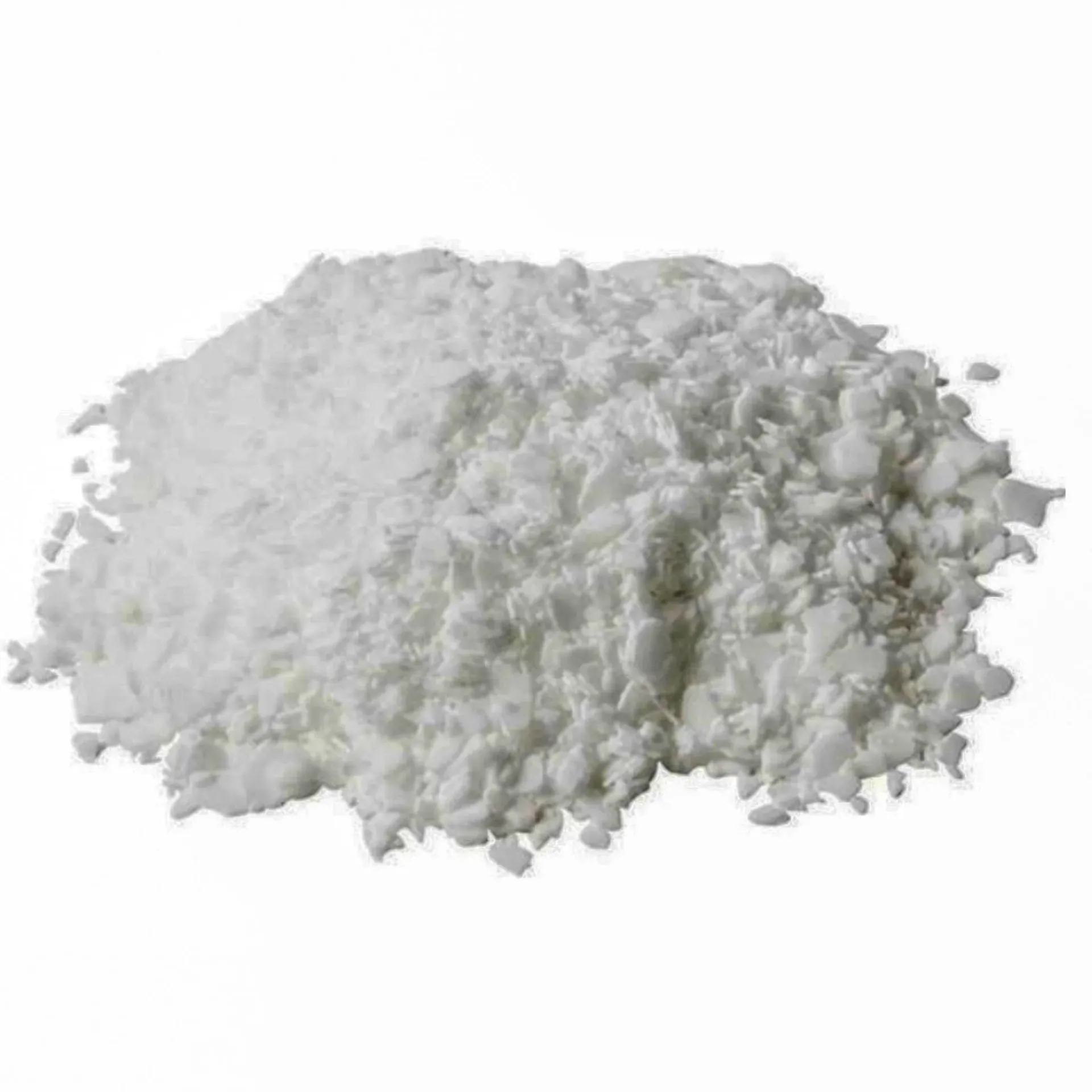
CosmySupplies supplies cosmetic-grade Stearic Acid (INCI: Stearic Acid, CAS 57-11-4) in India as a white to off-white hard solid. Stearic acid content 40 to 60%, combined stearic and palmitic acid minimum 90.0%, acid value 196 to 211 mg/g KOH, crystallisation point 54.5 to 69 degrees Celsius. COA available on request. Used in creams, lotions, soap-based cleansers, shaving creams, deodorant sticks, and hair conditioners. Shipped from Bengaluru across India. Available at cosmysupplies.com.
INCI: Stearic Acid | CAS: 57-11-4 | EINECS: 200-313-4 | Grade: Cosmetic | Form: White to off-white hard solid (flakes or pellets)
Composition: Stearic acid (C18) 40 to 60% | Palmitic acid (C16) balance | Combined C16 and C18 minimum 90.0%
Functions: Emollient | Emulsifier | Viscosity Controlling | Thickener | Opacifying Agent | Surfactant | Soap-Forming Agent | Skin Conditioner | Barrier Replenisher
Used In: Face Cream and Lotion | Cold Cream | Soap-Based Facial Cleanser | Shaving Cream | Deodorant Stick | Hair Conditioner | Body Butter | Bar Soap | Cream Foundation | Pomade
CIR Reviewed | EWG Score 1 | FDA GRAS | Natural Fatty Acid | Non-Comedogenic | Skin Barrier Compatible
Benefits
The foundational emulsifier and thickener of cream formulation
Stearic acid is the ingredient that gives classic cold creams, vanishing creams, and moisturising lotions their characteristic thick, creamy, spreadable texture. When melted into the oil phase and combined with an alkaline compound (triethanolamine, sodium hydroxide, or potassium hydroxide) in the water phase, stearic acid partially saponifies — a portion converts to its soap salt (sodium stearate or potassium stearate), which acts as the emulsifier to bind the oil and water phases. The remaining unsaponified stearic acid acts as a thickener and emollient. This dual role — emulsifier and thickener simultaneously — is unique to stearic acid and is the basis of the classic vanishing cream system used in Indian cosmetics for decades.
Naturally present in skin's own lipid barrier
Stearic acid is a natural component of the skin's intercellular lipid matrix, alongside ceramides and cholesterol. When applied topically, it replenishes these intercellular lipids, helping to reduce transepidermal water loss (TEWL) and support the skin barrier's structural integrity. This is the basis of its emollient and barrier-repair function in moisturising creams. The ingredient is not foreign to skin biology — it is something the skin already contains and uses, which explains its exceptional tolerability across skin types including sensitive skin.
CIR Expert Panel reviewed safe
Stearic acid and other long-chain fatty acids (lauric, myristic, palmitic, oleic) were reviewed by the CIR Expert Panel and concluded safe for use in cosmetics. Stearic acid is GRAS (generally recognised as safe) as a direct food additive under FDA regulations. EWG Skin Deep rates it score 1 — the lowest possible hazard rating. Non-comedogenic rated 0 to 2, well-tolerated across skin types including sensitive and acne-prone. This is one of the best-evidenced safety profiles in the entire CSW ingredient range.
Creates pearlescent, opaque, creamy texture in emulsions
Stearic acid is one of the primary opacifying agents in cosmetic emulsions. When an oil-in-water emulsion containing stearic acid is heated and cooled, the stearic acid crystallises out in fine uniform crystals that scatter light, giving the emulsion a white, opaque, pearlescent appearance. This is why vanishing creams, cold creams, and body lotions have their characteristic white appearance even when they contain relatively little oil. The texture and visual character of a stearic acid-based emulsion is distinctive and difficult to replicate with other thickeners.
Soap-forming agent in soap
When stearic acid is neutralised with an alkali — typically triethanolamine (TEA) at a 2:1 stearic to TEA ratio — it forms a potassium stearate soap in-situ. This reaction is the basis of every soap-based facial cleanser, cleansing balm activated by water, and classic cold cream. The resulting soap is a mild, skin-compatible surfactant with creamy lather. For Indian indie brands building a soap-based facial cleanser positioning, stearic acid plus TEA is the most straightforward formulation route. Note: the finished formula pH will be approximately 8 to 9 — not skin-compatible pH for claims around pH-balanced cleansing.
Hard stick and pencil-grade cosmetic formulations
In anhydrous stick formulations (deodorant sticks, lip pencils, concealer sticks), stearic acid provides the structural framework that allows the product to be pressed into a stick format and applied from the stick without melting at normal ambient temperatures. Its crystallisation point of approximately 54.5 to 69 degrees Celsius makes it one of the highest-melting fatty acids available for cosmetic stick formulation at an affordable cost point. Shaving creams also depend on stearic acid as the primary fatty acid that creates the dense, stable foam structure.
Applications
In an O/W emulsion cream or lotion
Use at 5 to 15% of the total formula in the oil phase alongside other emollients and waxes. Melt stearic acid into the oil phase at 70 to 80 degrees Celsius. Prepare the water phase separately with triethanolamine at a ratio of approximately 2 parts stearic acid to 1 part TEA by weight, or with sodium hydroxide solution. Add the water phase to the oil phase with continuous mixing. The partial saponification reaction creates the in-situ emulsifier. Cool with mixing. The resulting emulsion is thick, opaque, and white with a characteristic creamy skin feel. This is the classic Indian cold cream formulation system.
In a modern O/W emulsion with a dedicated emulsifier
Use at 2 to 5% in the oil phase as a thickener and emollient alongside a dedicated emulsifying wax (Cetearyl Alcohol and Polysorbate 60 system, or Emulsifying Wax NF). Stearic acid does not need to be the sole emulsifier — it contributes thickening, opacifying, and skin-feel improvement alongside a more controlled emulsifying system. At 3% in the oil phase, it adds measurable body and creaminess to any oil-in-water emulsion without significantly changing the emulsification chemistry.
In a soap-based facial cleanser
Use at 10 to 20% in a soap-based facial cleanser with triethanolamine at 5 to 10% in the water phase. The ratio of stearic acid to TEA determines the lather character and the residual free stearic acid content (which contributes emolliency and creaminess to the cleanse). A 2:1 ratio of stearic to TEA is a standard starting point. Add glycerin at 3 to 5% for additional emolliency and post-wash moisture retention. The finished pH will be approximately 8 to 9.
In a shaving cream
Use at 20 to 40% in a shaving cream base alongside potassium hydroxide and stearic acid to create the potassium soap foam system. Shaving cream is one of the highest stearic acid-containing cosmetic products in the market. The dense, stable, cushioning foam of a traditional shaving cream is almost entirely a product of the stearic acid-potassium hydroxide soap system.
In a deodorant stick or anhydrous stick
Use at 5 to 15% in an anhydrous stick base alongside beeswax or carnauba wax, talc or starch, and active deodorant ingredients. Stearic acid contributes the waxy, smooth glide of the stick and raises the melting point of the final product to ensure it does not soften at Indian ambient temperatures (which can reach 35 to 45 degrees Celsius in summer). At 10%, it provides a firm stick with good skin application feel.
In cold process or hot process soap
Use at 0.5 to 5% of the total oil weight in a cold process soap formula to add hardness, stable lather, and a white bar colour. Stearic acid saponifies with sodium hydroxide (NaOH) at a saponification value of approximately 197 to 198 mg NaOH/g. In a soap bar, it contributes a hard, white, long-lasting bar with a stable, creamy lather that persists in water. At above 5% of oils, it can cause the soap batter to accelerate trace or seize.
How to Use
Melting and incorporation
Stearic acid is a hard solid with a crystallisation point of 54.5 to 69 degrees Celsius. It must be melted before incorporation into any formulation. Add to the oil phase and heat to 70 to 80 degrees Celsius with gentle agitation until fully melted and clear. Do not overheat above 85 degrees Celsius as discolouration may occur. Ensure stearic acid is fully dissolved into the oil phase before combining with the water phase to minimise the risk of graininess in the finished emulsion.
Graininess prevention
Graininess is the most common formulation problem with stearic acid. It occurs when the oil phase cools too quickly or unevenly, causing stearic acid to crystallise in large, uneven crystals rather than the fine uniform crystals needed for a smooth emulsion. Prevent graininess by: (1) ensuring stearic acid is fully melted and homogeneous in the oil phase before emulsification, (2) combining oil and water phases at the same temperature (both at 70 to 75 degrees Celsius), and (3) cooling the emulsion slowly with continuous stirring rather than rapid cooling in a cold water bath.
Saponification calculation note
When using stearic acid in a soap-based system with TEA, NaOH, or KOH, the saponification value of 197 to 212 mg KOH/g from the Greenway TDS is the reference figure for calculating the alkali requirement. For a soap-based cream with TEA, use the ratio of 2 parts stearic acid to 1 part TEA (by weight) as a starting point. Adjust the ratio based on desired lather character, final pH, and emolliency. A higher ratio of stearic to TEA produces a richer, more emollient cream with a less soapy feel. A lower ratio produces more pronounced saponification and a higher-lather, higher-pH system.
Compatibility
Stearic acid is compatible with most cosmetic oil-phase ingredients: waxes, emollients, butters, esters. It is compatible with nonionic, anionic, and amphoteric surfactants. Avoid combining with high concentrations of cationic emulsifiers (e.g., behentrimonium chloride) without testing — the anionic character of stearic acid can interact with cationics to form insoluble complexes.
Storage
Store in sealed containers at room temperature, away from light . Stearic acid is one of the most shelf-stable cosmetic ingredients — it is a saturated fatty acid with no double bonds and is highly resistant to oxidation. Shelf life 2 years from manufacture date. Store away from high humidity to prevent surface oxidation in humid Indian conditions.
Claims You Can Make
For your label and marketing:
Natural Fatty Acid | Skin Barrier Replenishing | Emollient | Thickening | Creamy Texture | Non-Comedogenic
For your formulator brief:
Emollient | Emulsifying | Viscosity Controlling | Opacifying Agent | Surfactant | CIR Expert Panel reviewed safe for cosmetic use | FDA GRAS ) | EWG Skin Deep score 1 | Non-comedogenic rated 0 to 2 | Natural component of skin's intercellular lipid matrix | Acid value 196 to 211 mg/g KOH | Saponification value 197 to 212 mg/g KOH | Stearic acid 40 to 60%, combined C16/C18 minimum 90.0% | Microbiological: E. coli negative, aerobic count max 1000 CFU/g
For usage rate guidance, emulsification system selection, and formulation troubleshooting, contact the CosmySupplies team.
WhatsApp | Email: info@cosmysupplies.com
Technical Information
|
Property |
Value |
|
INCI Name |
Stearic Acid |
|
Synonyms |
Octadecanoic acid | C18:0 saturated fatty acid |
|
Physical Form |
White to off-white hard solid. |
|
Colour |
White or yellowish . Natural variation expected. |
|
Odour |
Mild characteristic waxy/fatty odour |
|
Molecular Formula |
C18H36O2 |
|
Molecular Weight |
284.48 g/mol |
|
CAS Number |
57-11-4 |
|
EINECS |
200-313-4 |
|
COSING REF |
79070 |
|
Stearic Acid (C18) Content |
40 to 60% |
|
Combined Stearic and Palmitic Acid |
Minimum 90.0% |
|
Acid Value |
196 to 211 mg KOH/g |
|
Saponification Value |
197 to 212 mg KOH/g |
|
Iodine Value |
Maximum 7.0 g/100g |
|
Loss on Drying |
Maximum 0.2% |
|
Residue of Ignition |
Maximum 0.1% |
|
Non-Saponifiable Matter |
Maximum 1.5% |
|
Crystallisation Point |
54.5 to 69 degrees Celsius. Wide range reflects the mixed C16/C18 commercial grade. Pure stearic acid crystallises at approximately 69 to 70 degrees Celsius. |
|
Lead (Pb) |
Maximum 1.0 mg/kg |
|
Mercury |
0.5 ppm maximum |
|
Cadmium |
0.5 ppm maximum |
|
Arsenic |
Maximum 1.0 ppm |
|
Total Aerobic Microbial Count |
Maximum 1000 CFU/g |
|
Total Mould and Yeast |
Maximum 100 CFU/g |
|
E. coli |
Negative |
|
Recommended Usage Rate |
Classic vanishing cream O/W: 5 to 15% in oil phase. Modern O/W emulsion with dedicated emulsifier: 2 to 5%. Soap-based facial cleanser: 10 to 20%. Shaving cream: 20 to 40%. Deodorant stick: 5 to 15%. Cold process soap: 0.5 to 5% of oils. |
|
Solubility |
Soluble in ethanol. Insoluble in water. Soluble in oils when melted. |
|
Melting / Incorporation Temperature |
Heat to 70 to 80 degrees Celsius in oil phase until fully melted. Do not exceed 85 degrees Celsius. |
|
pH of Finished Formulation Note |
When saponified with TEA in a soap-based cream, finished formula pH approximately 8 to 9. Not suitable for pH-balanced (5.5) leave-on claims in that system. |
|
Shelf Life |
2 years from manufacture date |
|
Storage |
Room temperature, sealed, away from light |
|
Grade |
Cosmetic Grade — mixed C16/C18 commercial grade (stearic acid 40 to 60%, not triple pressed) |
Pairs Well With
Triethanolamine (TEA)
The classic saponification partner for a soap-based cream system. Use stearic acid at 10 to 20% in the oil phase and TEA at 5 to 10% in the water phase at a 2:1 stearic to TEA ratio by weight. The partial saponification creates potassium stearate in-situ, which acts as the emulsifier. This is the most widely used emulsification system in Indian cold cream formulation history and remains the reference system for soap-based facial cleansers.
Co-thickener and stabiliser in O/W emulsions. Combined with stearic acid in the oil phase, cetearyl alcohol contributes additional thickening, improves the crystal structure of the emulsion, and gives a smoother, less waxy skin feel than stearic acid alone. The combination of stearic acid and cetearyl alcohol is the standard oil-phase thickener system for body lotions and face creams.
Humectant counterpart in creams and cleansers. In a soap-based facial cleanser containing stearic acid and TEA, glycerin at 3 to 5% provides post-wash moisture retention and counteracts the potential dryness from the alkaline pH of the soap system. In an emulsion cream, glycerin draws moisture to the skin surface and works alongside the emollient and barrier-replenishing action of stearic acid.
Structural partner in anhydrous stick formulations. Stearic acid and wax together create the hard, smooth stick texture required for deodorant sticks, body butter bars, and cosmetic sticks. Stearic acid contributes the lower-melting waxy structure; beeswax or carnauba provides the higher-melting structural framework. The ratio of stearic acid to wax determines the final stick hardness and glide character.
Emollient combination for body butters and rich facial creams. Shea butter itself contains natural stearic acid (typically 30 to 45% of its fatty acid profile) — adding additional stearic acid alongside shea butter enriches the barrier-replenishing and emollient character of the finished cream. This is one of the most popular Indian indie brand face cream bases: stearic acid, shea butter, and a lighter carrier oil, emulsified with a dedicated emulsifying wax.
Sodium Hydroxide or Potassium Hydroxide
Saponification agents for cold process soap and hot process soap.
Stearic acid saponifies with NaOH to produce sodium stearate (hard bar soap
component) and with KOH to produce potassium stearate (liquid soap and shaving
cream component). Use the saponification value of 197 to 212 mg KOH/g from the
TDS for alkali calculation in soap formulation
Important Information
Stearic acid is a hard solid that must be fully melted before incorporation into any formulation. Add to the oil phase and heat to 70 to 80 degrees Celsius with continuous agitation until completely dissolved and clear. Do not add to cold formulations — incomplete dissolution causes graininess in the finished product.
When used in soap-based cream systems with triethanolamine, sodium hydroxide, or potassium hydroxide, the finished formula pH will be approximately 8 to 9. This is acceptable for rinse-off cleansers and shaving creams. It is not appropriate for leave-on face creams claiming pH-balanced or skin pH-compatible performance unless the formula pH is subsequently adjusted — which will break the emulsion in a classic saponification system. For pH-controlled leave-on emulsions, use stearic acid at lower concentrations (2 to 5%) alongside a dedicated nonionic emulsifier rather than a saponification system.
The cosmetic grade stearic acid supplied by CosmySupplies contains 40 to 60% stearic acid (C18) with the balance primarily palmitic acid (C16). It is not triple pressed. This is the standard commercial grade for most cosmetic applications. If you require 90%+ pure stearic acid for pharmaceutical or specialised cosmetic applications, please contact us.
COA is available on request. No download link. Contact us via WhatsApp or email.
Disclaimer:
All products sold by CosmySupplies are supplied as raw materials for research, formulation, and manufacturing purposes. The information on this page is for formulation reference only and does not constitute professional, regulatory, or safety advice.
Raw materials of natural or botanical origin may show variation in colour, odour, texture, and physical properties between batches. These variations are inherent to the material and do not indicate a change in quality or function.
Customers are responsible for evaluating the suitability of any ingredient for their specific application and ensuring compliance with applicable regulations. CosmySupplies does not guarantee suitability for any specific end use without independent verification.
All transactions on CosmySupplies are B2B in nature. Contact us at support@cosmysupplies.com or WhatsApp before placing a bulk order. cosmysupplies.com.
Our latest content
Check out what's new in our company !